
Structure first, prompt second
A strong prompt is not a clever sentence. It is a well-shaped input: goal, context, audience, format and constraints.
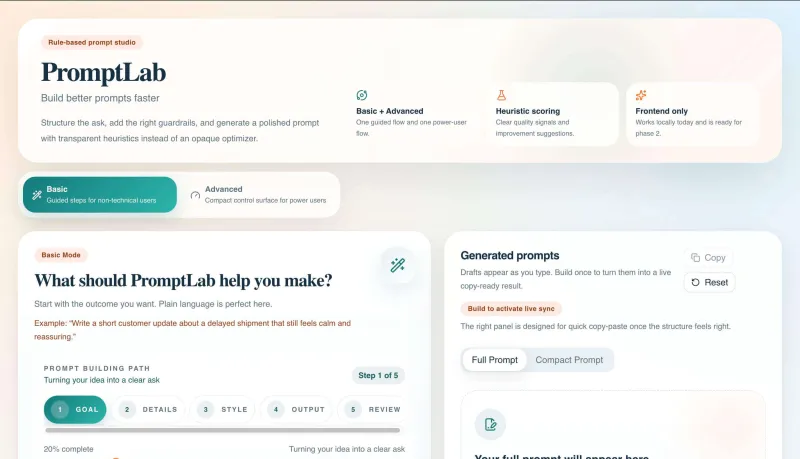
The problem often appears before the AI step
When AI output keeps drifting, the model is not always the issue. Very often the input is simply under-structured: the task is vague, context is missing, the audience is undefined and the response format was never agreed.
A strong input has six parts
- goal: what needs to be done
- context: what the model needs to know
- audience: who the output is for
- tone: how the answer should sound
- format: how the result should be structured
- constraints: what it should not do
When the input is treated as part of the system, later steps become more stable and easier to use.
Constraints are not decoration
If the result continues into a larger system, it needs to be stable enough for the next step to use without guessing. That is why constraints, schema, format examples and edge cases are more useful than long generic prompts.
Constraints are also a security control. A prompt that states clearly what the model must not do is much harder to talk out of its job than a vague one.
Process first
AI can be a useful part of a system, but only when the surrounding process is clear. Before the model comes intake, decision logic, output shape, a review path and a way to measure whether the step is actually useful.